

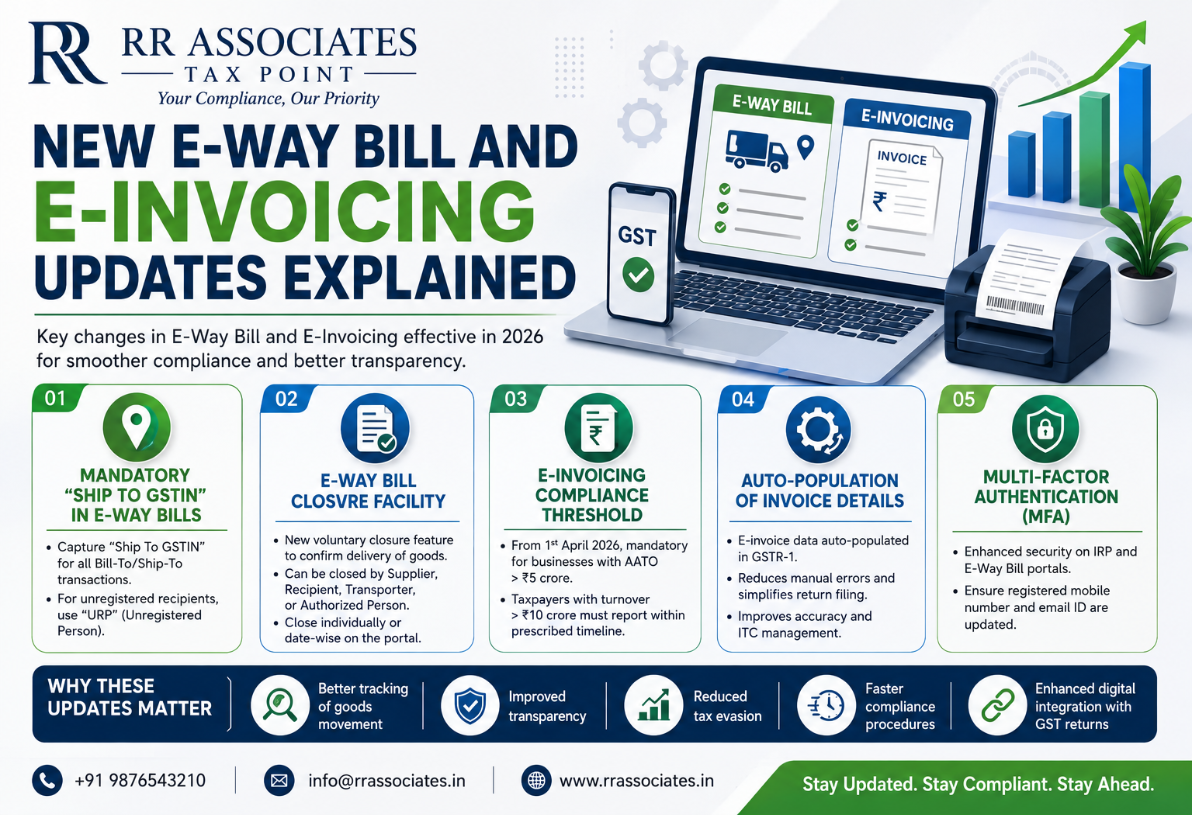
As GST compliance continues to evolve, the Government has introduced important changes to the E-Way Bill and E-Invoicing systems in 2026. These updates are aimed at improving transparency, strengthening tracking mechanisms, and ensuring seamless compliance for businesses.
One of the biggest changes is the mandatory capture of the "Ship To GSTIN" while generating an E-Way Bill. This requirement applies to Bill-To/Ship-To transactions and helps establish a direct link between the goods and the actual recipient.
This change is expected to reduce mismatches and enhance invoice verification.
A new voluntary E-Way Bill Closure feature has been introduced to confirm successful delivery of goods.
The closure can be performed by:
Businesses can close E-Way Bills individually or date-wise through the portal. This feature creates better documentation and helps maintain accurate movement records.
From April 1, 2026, businesses with an Aggregate Annual Turnover (AATO) exceeding ₹5 crore are required to comply with e-invoicing regulations.
Taxpayers with turnover above ₹10 crore must ensure invoices are reported within the prescribed timeline, failing which the invoices may become invalid for Input Tax Credit (ITC) purposes.
GSTN has further enhanced automation by enabling e-invoice data to be automatically populated into GSTR-1. This reduces manual errors and simplifies return filing.
Benefits include:
Additional security measures have been introduced for the IRP and E-Way Bill portals through Multi-Factor Authentication (MFA). Taxpayers should ensure that their registered mobile numbers and email IDs remain updated to avoid login issues.
The latest changes focus on:
✔ Better tracking of goods movement
✔ Improved transparency
✔ Reduced tax evasion
✔ Faster compliance procedures
✔ Enhanced digital integration between E-Invoicing and GST returns
Businesses, transporters, and tax professionals should review their existing processes and ERP systems to ensure readiness for these changes. Staying updated with GST notifications and implementing timely compliance measures can help avoid penalties and ensure smooth operations.
At RR Associates – Tax Point, we help businesses navigate GST compliance with confidence and accuracy.
Your Compliance, Our Priority.


Comments
0 visibleNo approved comments yet. Submit one from the form and it will appear here after admin approval.